Page


ISSUE #1 CONTENTS

From The Savage Detectives (1998)
Roberto Bolaño
I went over to the table and studied the diagrams and drawings, leafing slowly through the rough stack of papers. The mock-up for the magazine was a chaos of geometric figures and randomly scribbled names or letters. It was obvious that poor Mr. Font was on the verge of a nervous breakdown.
“What do you think?”
“Extremely interesting,” I said.

“Of The Cities, and Namely of Amaurote” from Utopia (1516)
Sir Thomas More
As for their cities, he that knoweth one of them, knoweth them all: they be all so like one to another, as farforth as the nature of the place permitteth. I will describe therefore to you one or another of them, for it skilleth not greatly which: but which rather than Amaurote?

Inside David Foster Wallace’s Private Self-Help Library (2011)
Maria Bustillos
Among David Foster Wallace’s papers at the Ransom Center at the University of Texas at Austin are three hundred-odd books from his personal library, most of them annotated, some heavily as if he were scribbling a dialogue with the author page by page.

Heavy Metal Fan Letters
How are you supposed to pronounce Yngwie Malmsteen’s name?

The Twentieth Century Is Only The Nineteenth Badly Pronounced (a selection of quotes taken from twentieth century art criticism).
… in these times you should not expect any words of my own from me—none but these words which barely manage to prevent silence from being misinterpreted. – Karl Kraus (1914).

Page from Blast (1914-1915)
Wyndham Lewis and occasional others
OH BLAST FRANCE pig plagiarism …

Page from Counterblast (1954)
Marshall McLuhan
Bless the fast-talking illiterate American
his face-to-face
ear-to-ear
methods of learning

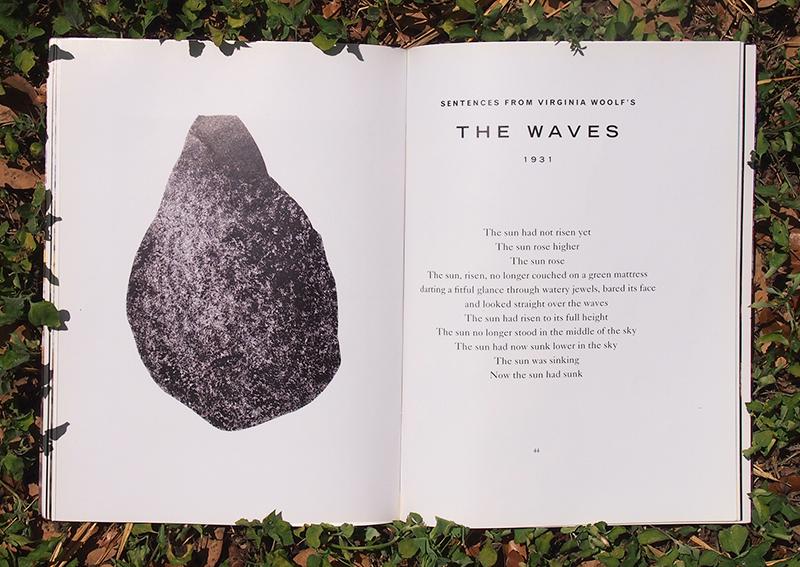
Sentences from The Waves (1931)
Virginia Woolf
The sun, risen, no longer couched on a green mattress darting a fitful glance through watery jewels, bared its face and looked straight over the waves.

“I am the daughter of Earth and Water” (2011)
Bernard Yenelouis
I first became aware of Alvin Langdon Coburn’s photographs while looking through the pag- es of The New York Edition of Henry James, which sat in its entirety, dusty and ignored, in my local library in western Michigan.

Interview with Barry Stone (2011)
“We could talk about the process of doing it or talk about the circularity issue. But perhaps that would be being too transparent; I don’t know,” I began.
“It’s hard to know how much to reveal and how much to conceal.” Barry laughed; we had discussed this several times before.

EDITOR’S STATEMENT

The number zero emerged in Hindu and Arabic mathematical systems towards the beginning of our current millennium. Literally it means nothing, but early mathematicians symbolized zero with a circle, and the circle represents the cosmic wheel—according to the philosopher and art historian A.K. Coomaraswamy (1877-1947)—and the cosmic wheel represents all existence. Describing Vedanta metaphysics, Coomaraswamy said that any given world or state of being is a wheel, and a revolution of the circles around the wheel corresponds to time. Zero and circle signal both the void and infinite multiplicity, and time always turns back in on itself.

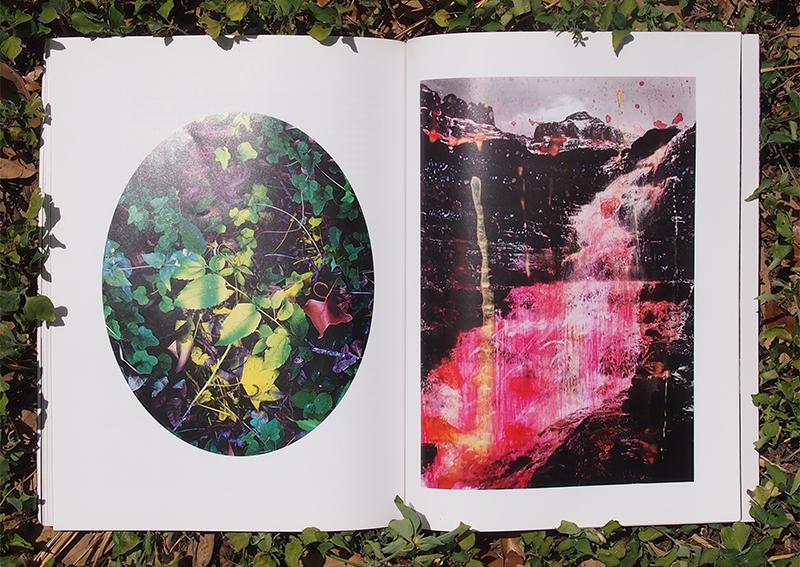
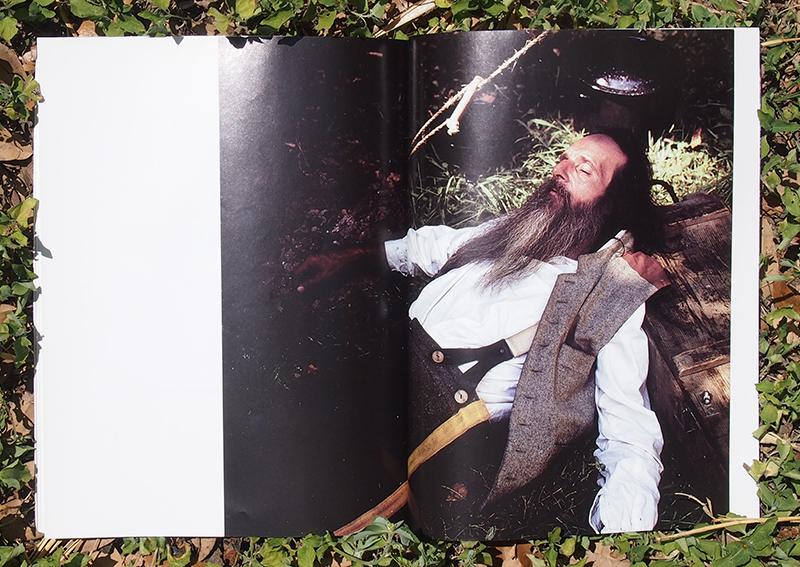
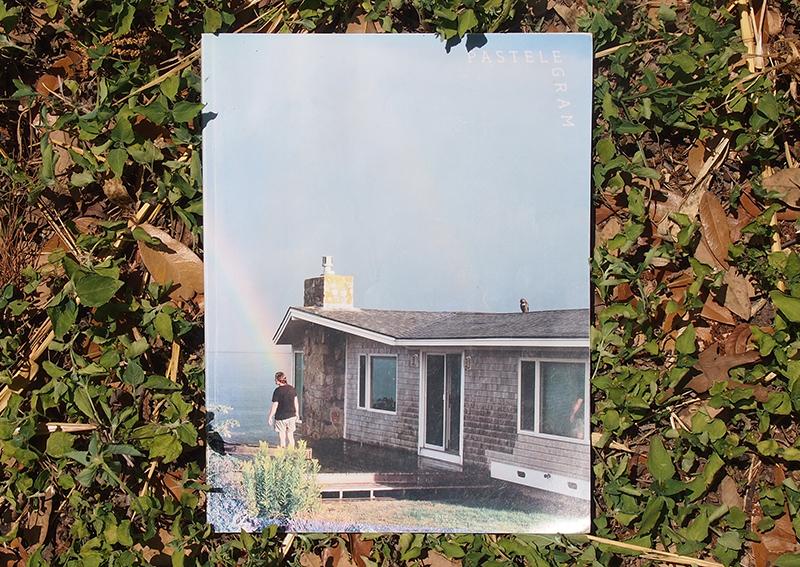
In preparing his issue for Pastelegram’s first issue, Barry Stone thought about history’s habit of repeating itself, and it is this notion of circularity that structures Stone’s issue of Pastelegram. For The sun had not risen yet / Now the sun had sunk, Stone created circular progressions of images, while Stone and I collaborated to include a series of texts that reveal cycles of ideas and aesthetics. Many of these are sources for Stone’s thinking on circularism, but we commissioned Bernard Yenelouis’ “I am the daughter of Earth and Water” specifically for this issue.

In his essay on Alvin Langdon Coburn, Yenelouis covers Coburn’s early progressiveness as well as the ways in which Coburn’s work looked old hat by the 1970s but appears new hat today. As Yenelouis notes, Coburn’s reputation didn’t fare well against the hard-line strictures of mid-century photography, but his interest in beauty succeeds in today’s image-laden pluralism.

Coburn was and Stone is a photographic abstractionist. Where Coburn turned to amorphous shapes like clouds in order to disable photography’s capacity for detailed description, Stone juxtaposes images.  In Stone’s issue of Pastelegram, compositional details in one image—like angles, colors and shapes—resonate into other pictures. Each photograph’s scene becomes both a moment’s depiction and an arrangement of forms.

Other writings printed in The sun had not risen yet / Now the sun had sunk are sources for Stone’s magazine work. Some, like Maria Bustillos’ article on David Foster Wallace’s self-help library, influenced Stone’s thinking on how ideas appear and reappear; Wallace’s readings of high-minded philosophers like Wittgenstein and Husserl as well as paperback psychologists demonstrate how the deep desire for social and personal change translates easily into platitudes.

Circularity seems commonplace, but it’s a slippery idea. Everything is always different and everything is always the same; sometimes it feels like Stone and I could have included just about any art, historical or art historical text. Artists, critics and historians like to talk about zeitgeist, after all, as the quotes appearing in “The Twentieth Century is Only the Nineteenth Badly Pronounced” attest. Writings like Umberto Boccioni’s Futurist Manifesto—which looks forward to an unrealized future—contrasts with Karl Kraus’ and Paul Klee’s recognition of time-ever-repeating-itself. Despite such contrasts, the quotes in “The Twentieth is Only the Nineteenth Badly Pronounced,” resonate with each other and become evidence of a circular business-as-usual despite certain writers’ utopian intentions.

— Ariel Evans


Born in Lubbock, Texas, Barry Stone earned an MFA in Photography from the University of Texas at Austin in 2001. Stone’s work most recently appeared in HUM, a solo show at SOFA Gallery in Austin. Stone’s work was also included in New Art in Austin: 15 to Watch at the Austin Museum of Art and the 2011 Texas Biennial. He is a member and founder of the photographic artists’ collective Lakes Were Rivers. Stone lives in Austin with his wife and two daughters, and is an Assistant Professor and the Coordinator of the Department of Photography in the School of Art and Design at Texas State University-San Marcos. His work is represented by Klaus von Nichtssagend Gallery in New York City.

Relevant links:
http://www.barrystone.com
http://www.lakeswererivers.com
http://www.klausgallery.com

Pastelegram’s biannual print issue is an artwork-as-magazine, and offers an original work by an artist, art historian or art critic designed for the magazine format.  Included in each issue is a collection of the work’s source material, which may include images by other artists or writings about other artists (some original, some reproduced), poetry or literature, theoretical texts, timelines or diagrams, advertisements or business letters, and so forth. Also featured in the magazine is an interview between our collaborator and an art critic or historian.

Copyright © 2013 Pastelegram. All Rights Reserved